Thanks for visiting us at AHEAD 2026

Don't just open the door.
Walk them across the stage.

The Lunabeam app showing a student's goal broken into phases with a clear next step to start

When a capable neurodivergent student falls behind, it is rarely about ability. It is about support. Lunabeam builds the skills they need, reaches out the moment it matters, and shows you the difference you make.

Executive function infrastructure for higher education.
The problem

When support disappears, so do the students

1 in 5

undergraduates reports a disability.

34% vs 64%

Students with disabilities finish college at roughly half the rate of their peers, a 30-point completion gap.

1 : 500

A single disability specialist can be responsible for 500 students, as caseloads climb and staffing stays flat.

Sources: U.S. National Center for Education Statistics; Chronicle of Higher Education (2024).

See it work

What "the part that actually helps" actually looks like.

A journey that starts in the summer before enrollement and continues every term afterwards.

Shown with our demonstration program, "Riverside / Bridges." No real student data.

What makes us different

Built for the students who need the most.
Which is why it holds up for everyone.

Engineered for depth

Lunabeam was built for students with the highest support needs, including intellectual and developmental disabilities. That depth is why it holds up for every student on a caseload: ADHD, autism, learning disabilities, and more. It is not a mainstream productivity app with an accessibility layer bolted on.

Executive function infrastructure for higher education: an AI co-pilot for neurodivergent students and the offices and programs that support them.

Start a 15-minute pilot conversation
For Disability Services Offices

Run a Disability Services Office?

Every fall, students arrive who had an IEP or 504 in high school and never register for services. Our pre-enrollment pilot reaches admitted students the summer before, busting the "my IEP transfers" myth and walking them through gathering their own documentation. The student does every step. Lunabeam just makes sure it gets done.

Start a pre-enrollment pilot conversation
Five reasons

Why programs and disability offices choose Lunabeam

How a founding-partner pilot works

A pilot, not a procurement saga.

One term, a starter cohort, and an evidence package at the end. Here is the whole arc.

1

Talk (15 min)

We learn your program, you see if it fits. No pressure.

2

Scope a cohort

One academic term, a starter group sized to your students.

3

Coach and measure

Students get support, and outcomes evidence accrues automatically.

4

Review and decide

You leave with an evidence package and a clear picture of impact.

No new budget line required.

Most partners cover a pilot as an operating expense that fits the funding their program already runs on, then braid in per-student support where a student already qualifies.

Pell Grants and Title IV aid help students with intellectual disability afford enrollment in your Comprehensive Transition and Postsecondary (CTP) program. The aid goes to the student for cost of attendance, supporting the tuition base your program already runs on.

What you get.

  • Discounted, locked founding-partner pricing
  • An outcomes-evidence package for your funder
  • Priority roadmap input
  • Reference standing and a direct line to the founder

What we ask.

  • A committed cohort for one term
  • A staff sponsor
  • Permission to measure outcomes
  • Willingness to be a reference if the pilot earns it
Start a 15-minute pilot conversation
Why we built Lunabeam

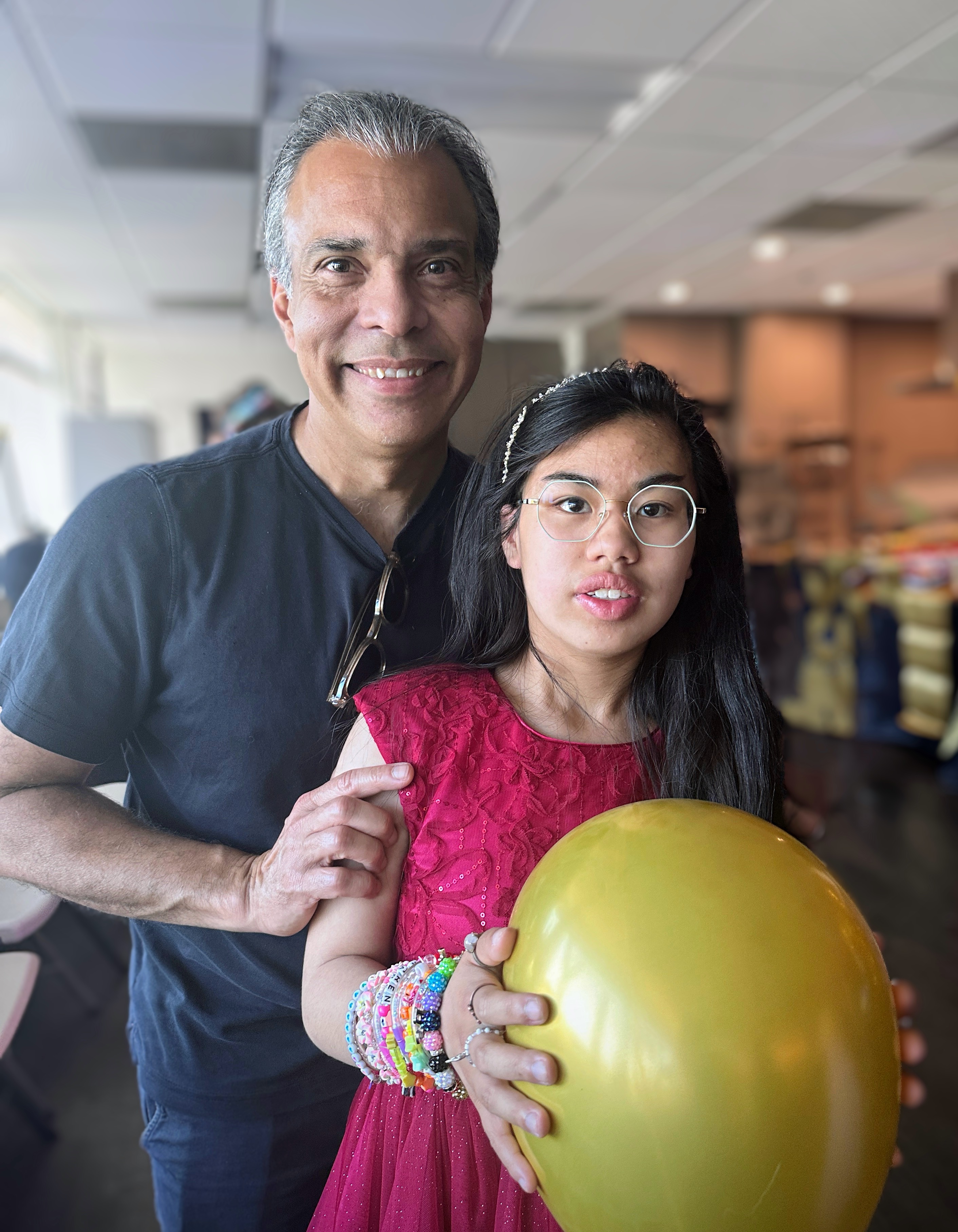
She wants independence. We were holding her back.

Carlos Sandrea with his daughter Natalia

This started with my daughter. Natalia is 16, she's autistic, and she wants to run her own life. Three years ago I realized the support that carried her this far, the planners and reminders my wife and I quietly handle, ends the day she graduates high school. College is where that gap widens, not where it closes.

No one was building what she'll need next: support that does the opposite of hovering, that breaks a big goal into a step she can own and then fades as she grows. So we built it.

Carlos Sandrea, Founder, Lunabeam Labs
FAQ

Questions you're probably asking.

What does it cost?+

Pricing is program-level and designed to be fundable through money you already touch (Title IV/Pell, VR/Pre-ETS, Medicaid HCBS), not discretionary budget. Founding partners receive discounted, locked terms; exact figures come in your pilot proposal.

Is our student data safe? Is it FERPA-compliant?+

Your data stays yours under a clear data-rights agreement: FERPA-ready handling and no sale of data. We're security-reviewed.

What outcomes can you prove today?+

We're pre-outcomes by design. Our measurement engine captures the evidence automatically, and the pilot is exactly how we prove outcomes, together. We won't overclaim results we don't have yet.

Who is it for?+

Two audiences. Disability Services Offices supporting neurodivergent students, meaning students with ADHD, autism, learning disabilities, and intellectual and developmental disabilities, and TPSID, CTP, and IPSE transition programs serving students with intellectual and developmental disabilities.

Do we need new staff or a big IT lift?+

No new headcount. Lunabeam is designed to extend your existing staff with minimal setup.

Start a 15-minute pilot conversation.

Fifteen minutes on your program, your students, and whether a founding-partner pilot fits.